Skip to her life

Melbourne 1919–2012

June Wright

She worked the switchboards at Central, Melbourne’s telephone exchange. Then she married, had six children, and wrote a murder there, by hand, at night, after the washing. Six of her crime novels came out between 1948 and 1966, and all seven are in print again.

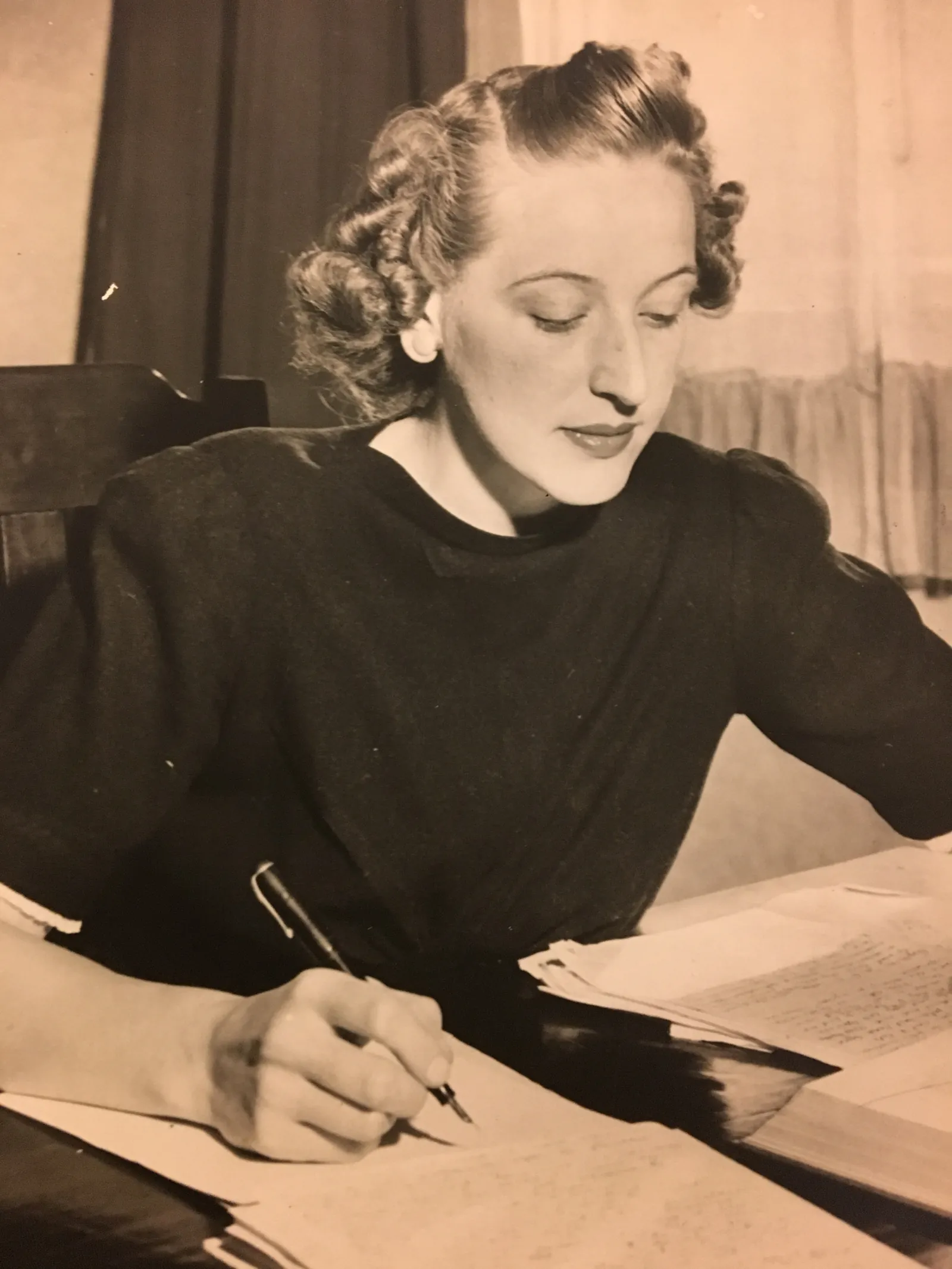
June Wright at a desk, writing with a fountain pen on a page of manuscript, eyes down, her hair in soft curls, in a dark high-necked dress; loose pages at her elbow and a curtained window behind.
June Wright in 1952, writing by hand, as she did every first draft. A family print. Animated by AI from the photograph; the movement is ours, not the photograph’s. Brenda Wright, via Wikimedia Commons
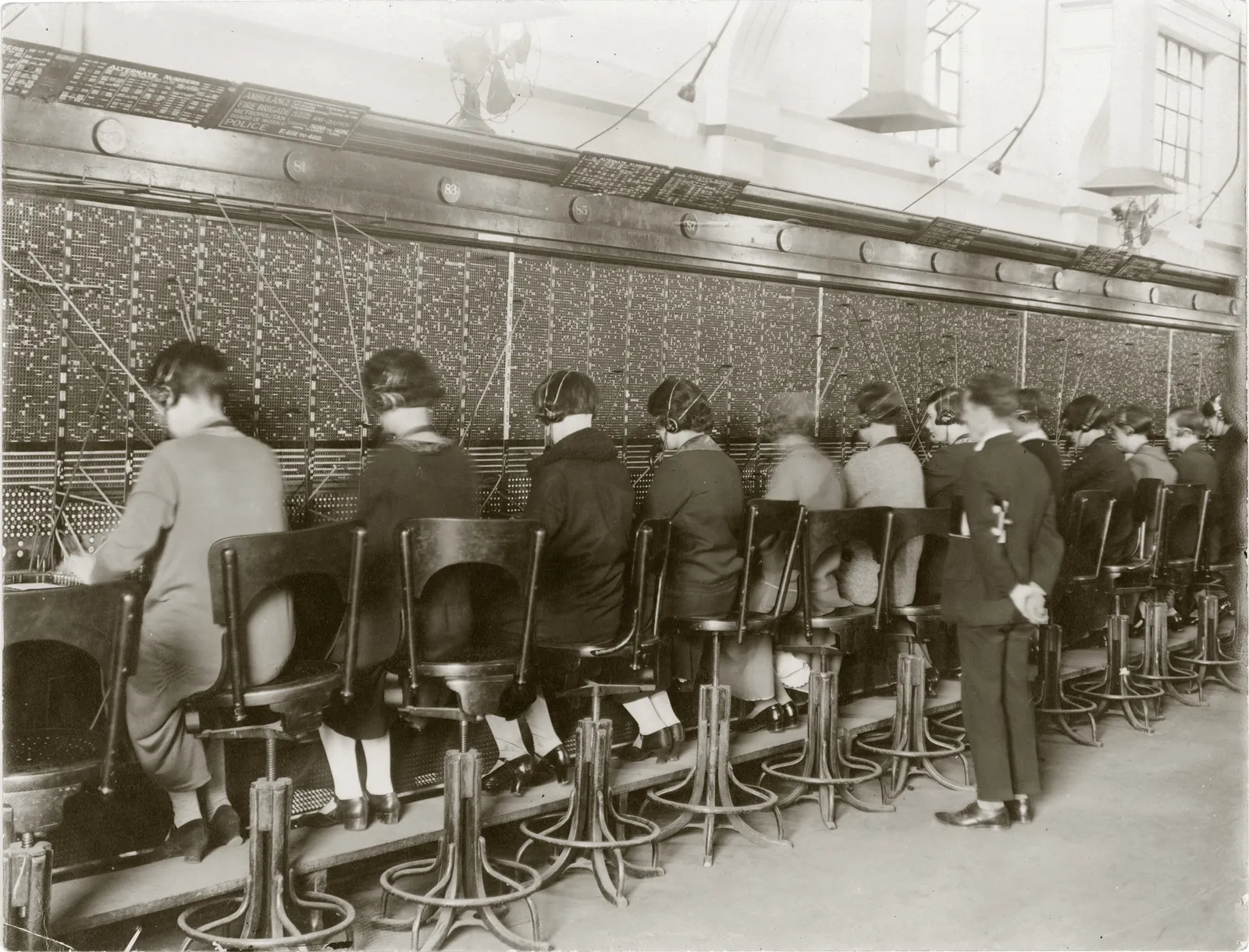
A switchboard running the length of a room, its face a dense field of jacks and lamps with cords looping up from the shelf; fourteen telephonists in headsets sit in a row on high swivel stools with their backs to the camera, and a young man in a dark suit stands among them, hands behind his back. Numbered brass discs run along the top of the board, and a sign above it lists the numbers for the ambulance, the fire brigade, the Board of Works and the police.
The board at Central, about 1930. The sign above it gives the numbers for the ambulance, the fire brigade and the police. This page’s contents are drawn as a position at a board like it: each part of her life has a jack, and its lamp lights while you read it. Animated by AI from the photograph; the movement is ours, not the photograph’s. State Library Victoria, H25298

Armadale 1919–1939

June Healy

Dorothy June Healy was born on 29 June 1919 at Nurse Goodsell’s private hospital in Malvern Grove, Malvern, the younger daughter of Gerald Healy and Dora Healy, née Newham. She was always June. There were two brothers, John and Paul, and a sister, Elaine.

Her father was a Commonwealth auditor and a cricketer of note, a Prahran batsman with nearly seven thousand runs, and in 1929 he was made chief auditor for South Australia. His father, John Healy, had been a teacher, played for Victoria, written the football notes in the Australasian for twenty-three years as “Markwell”, and was found dead at his desk in 1916, the secretary of the Victorian Cricket Association. The Healys had lived in Denbigh Road, Armadale, since the 1880s, and by 1940 June’s family was at No. 48.

She was taught by nuns, at Kildara in Malvern, at Loreto in Adelaide and at Loreto Mandeville Hall in Toorak, and in 1934 the Advocate gave her third place in its essay competition. After school she studied commercial art briefly, and in 1938 she was on the stage of the Princess Theatre as Lillian Brown in The Rise of Rosie O’Reilly, for the Victorian Catholic Lawn Tennis Association Players.

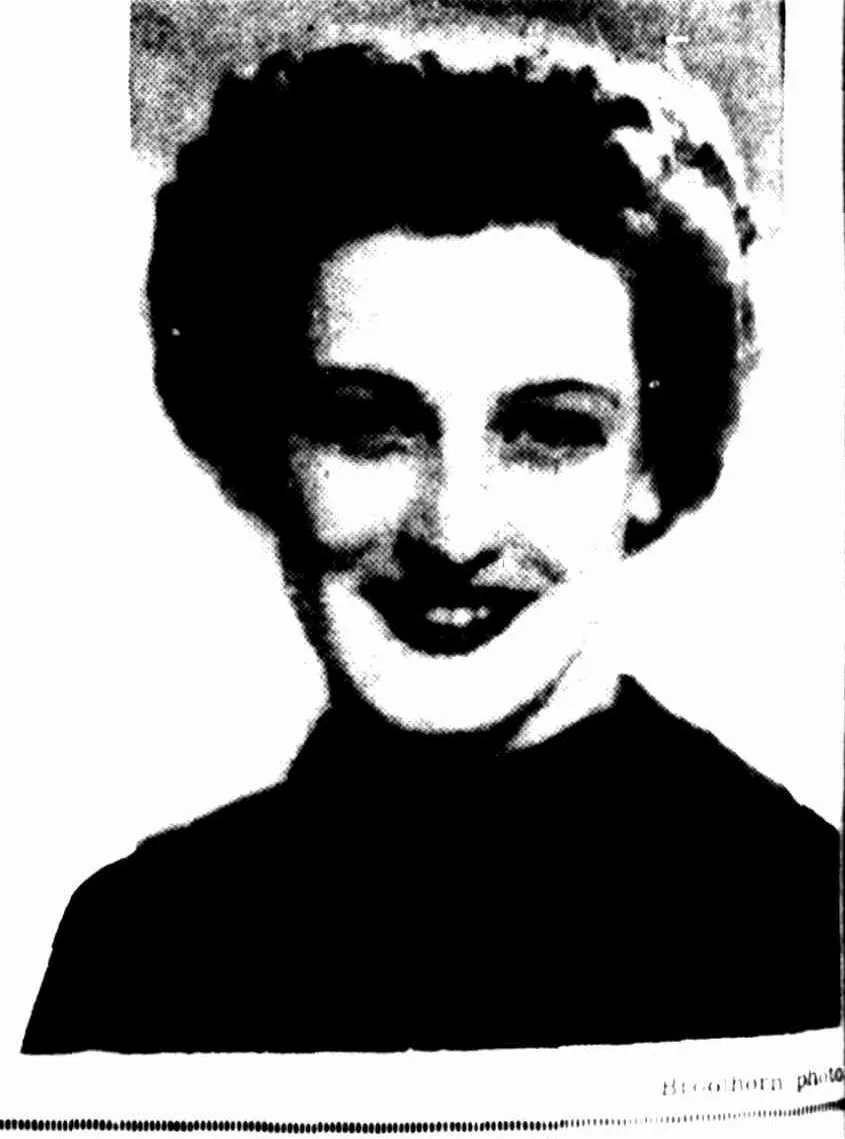
A newspaper portrait of a smiling young woman with thick dark hair waved up off her forehead, in a dark high-necked top.
June Healy at nineteen, the week of the play at the Princess Theatre. Sun News-Pictorial, 30 June 1938, page 41, via Trove

Central 1939–1941

Central and Trunks

In 1939 she went to work as a telephonist at the Central exchange in Lonsdale Street, on “Central and Trunks”. It was the city’s manual exchange, in a building of Pyrmont freestone that ran through to Little Bourke Street, with the switch room on the second floor under a saw-tooth roof, 150 feet long. In 1941, when Central turned sixty, The Argus noted that the manual exchange was still working in the Lonsdale Street building.

In 1946 the Sun News-Pictorial measured the work: up to 160 telephonists on duty at once and 40,000 calls a day, each girl at the board with 17 cords and 125 subscribers, and the job asking for a reach of six feet up and four feet eight across. The building was pulled down for the brown-brick Lonsdale Exchange, finished in 1969.

In June 1940 she became engaged to Stewart Oswald Wright, a cost accountant from Elsternwick, and in 1941 she married him.

“I heard it said hundreds of times ‘you could write a book about this place’ - and so I did.”

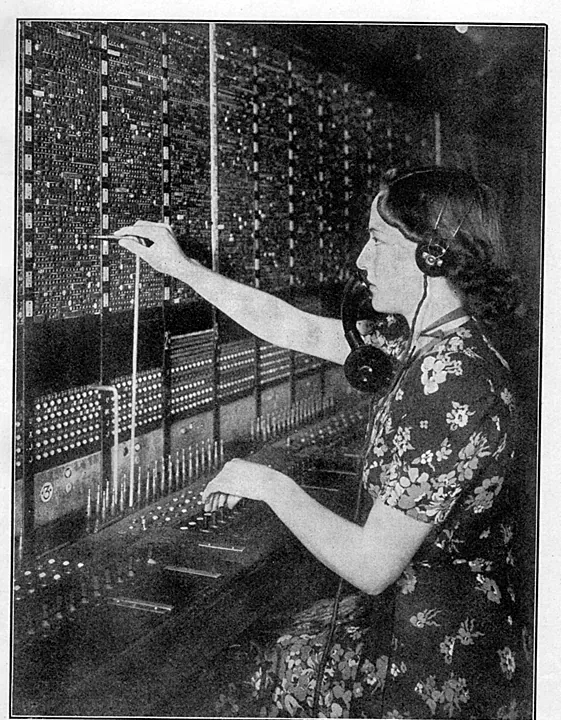
A printed page: a young telephonist in a floral dress and headset sits in profile at a tall switchboard, her right arm raised to put a plug into the field of jacks, her left hand on the keyshelf.
“A Telephonist operating a position on a C.B. multiple switchboard”, from a printed page that looks like a PMG operators’ manual. Derham Groves printed it in 2009 as June Wright at Central about 1940, courtesy of June Wright. Derham Groves, “Vale June Wright”, 2012
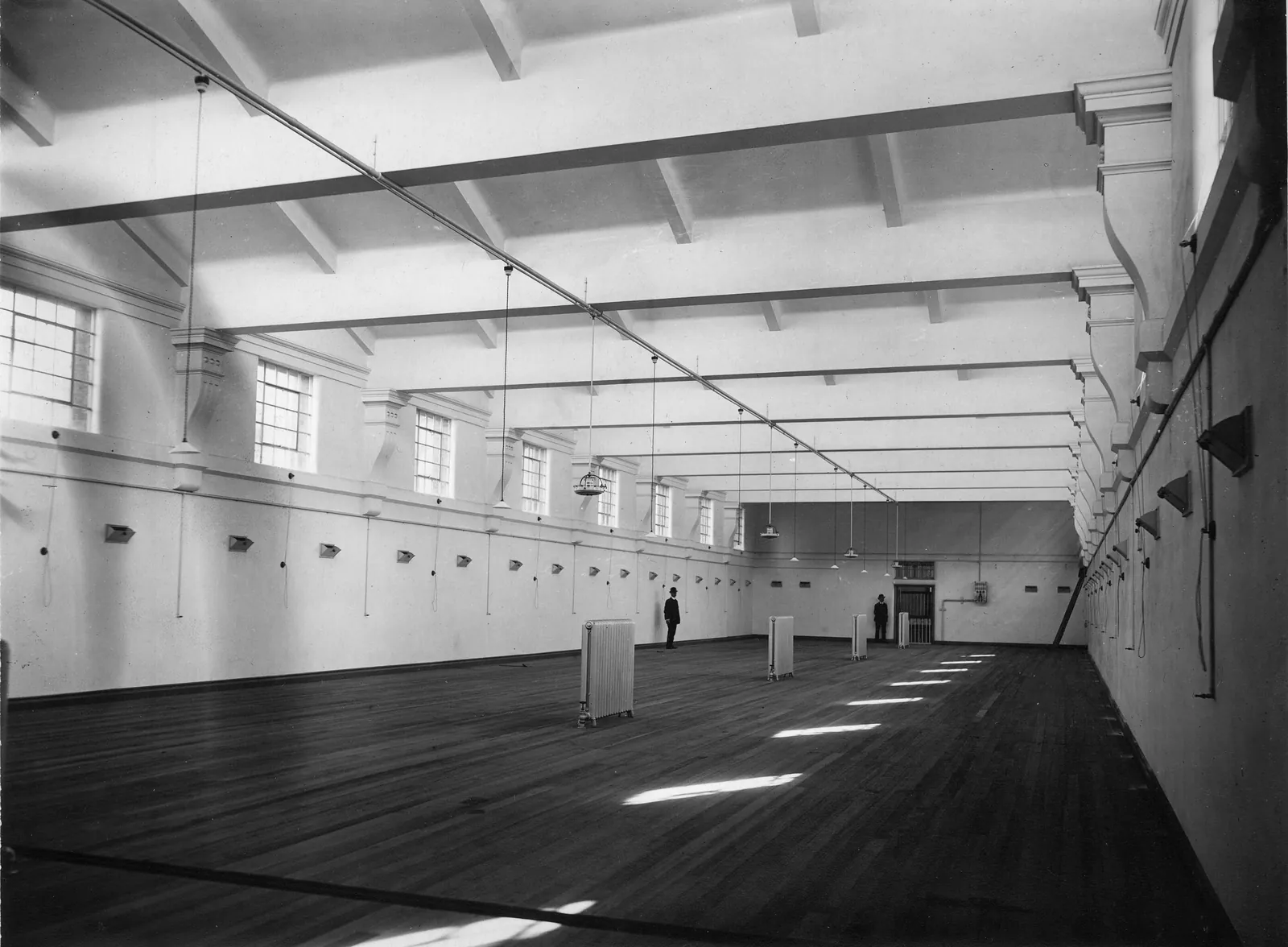
A long empty hall with a beamed concrete ceiling, tall windows down one wall, bare floorboards striped with sunlight and cable outlets along the walls; two men in dark suits stand far down the room.
Inside the new Central exchange, about 1909, photographed by its builders, John Monash’s Reinforced Concrete and Monier Pipe Construction Company, before the boards went in. University of Melbourne Archives, 1964.0012.00957
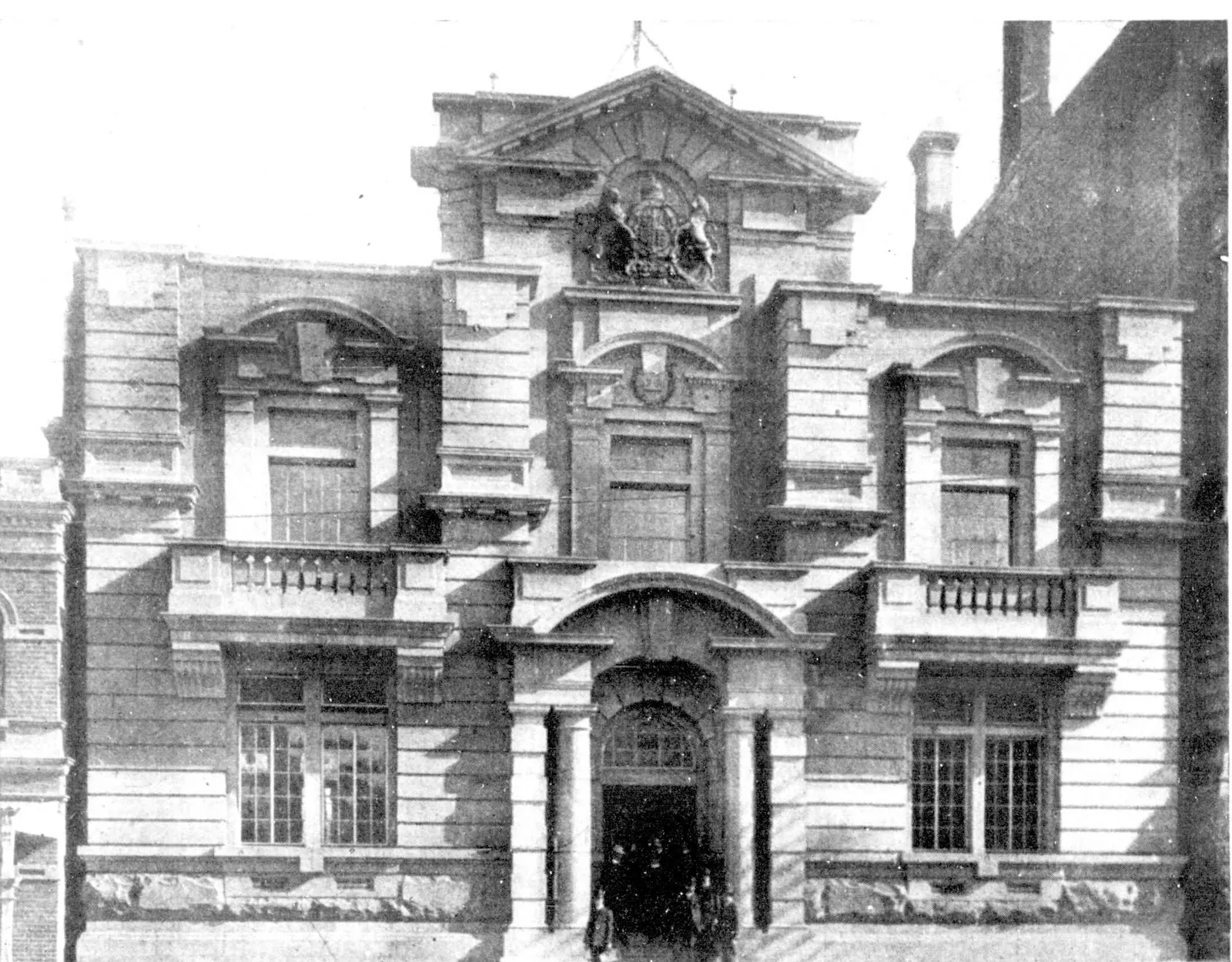
A newspaper photograph of a two-storey stone building with a carved coat of arms on its pediment, arched upper windows with balconies, and a columned doorway on the street.
Central’s front in Lonsdale Street, beside the Crown Law Offices, in January 1911. The coat of arms over the door was kept, and is set in the front wall of the exchange that replaced it. Leader, 21 January 1911, page 28, via Trove

Ashburton 1942–1946

A baby on her knee

The Wrights lived in Dent Street, Ashburton. Patrick was born in November 1942. At home with him she read her way through the local library and decided she could write one herself, and in 1943, when he was a year old, she began: a murder at Central, written by hand, because she could not think on to a typewriter.

Wrapping vegetable scraps in an old newspaper, she saw an advertisement for a competition: Hutchinson of London’s United Nations literary contest, £10,000 in prizes across nine sections, one of them for detective stories. Rosemary was born in October 1944, and from then on she could write only at night. No detective manuscript was given the prize, but the judges, John Creasey among them, recommended hers, and in October 1945 an air-mail letter came from England: Hutchinson would publish it, and wanted her next two.

In May 1946 she had twins, Nicholas and Anthony, at St Vincent’s Hospital. In July her father died, and the Wrights moved into the Healy house at 48 Denbigh Road, Armadale.

“As soon as I could sit up I demanded my manuscript.”

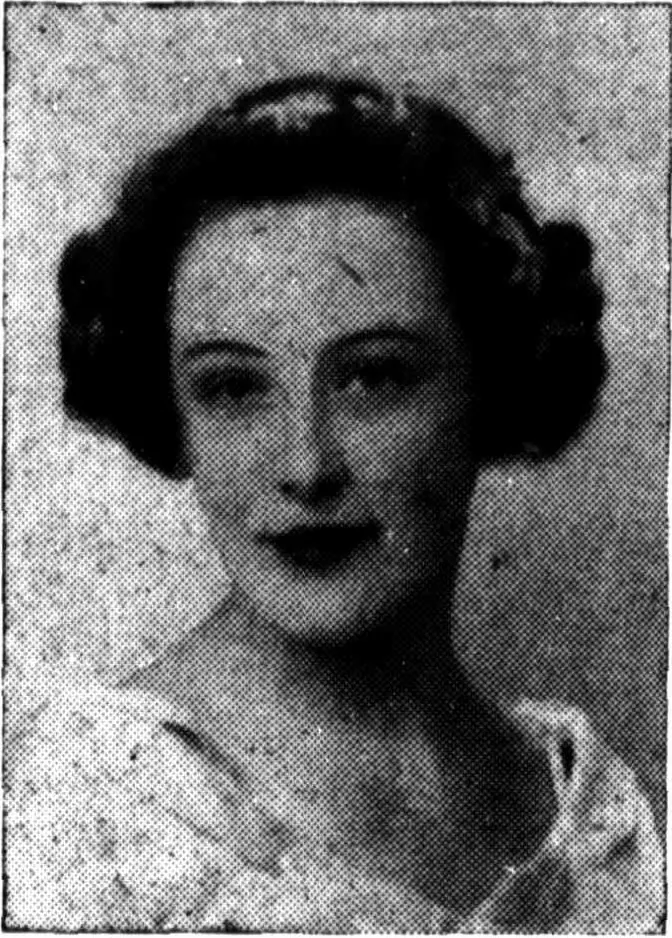
A newspaper studio portrait of a young woman with dark hair set in rolls about her face, dark lipstick and a pale ruffled blouse.
The Advocate’s “New Novelist”, February 1946, two years before the book was in the shops. The Advocate, 20 February 1946, page 4, via Trove

Denbigh Road 1946–1966

Murder as a sideline

Murder in the Telephone Exchange was in the Melbourne shops in March 1948. Hutchinson gave a lunch for her at the Oriental Hotel, where the Lord Mayor, Sir Raymond Connelly, said that many of them had felt at times they would like to murder people in the Central Exchange. By the end of the month it was sixth among the books most asked for at a city bookseller’s. In May she went to Sydney, her first holiday away from her four children.

She kept a house of nine rooms and did the shopping on a push-bike. On Mondays, the big wash, she was up at half past five to light the copper. She wrote for two hours a night, about a thousand words, while the children slept, and in 1952 she still wrote her first drafts by hand.

Woman’s Day ran her second book as a serial in 1949, advertising that the first had “outsold even Agatha Christie” in Australia; that is the magazine’s claim, and no sales figure has been found to test it. The ABC read it on the radio in 1950. A third came in 1952, the year Brenda was born; Stephen, the sixth, came later. In 1954 a nun solved a murder in a short story for the Catholic monthly Caritas: Mother Paul, modelled on Mother Mary Dorothea Devine, the Sister of Charity who ran the maternity ward at St Vincent’s when the twins were born. John Long, an imprint of Hutchinson, published three Mother Paul novels between 1958 and 1966, and with the royalties June bought a fur coat and remodelled her kitchen.

“Oh, yes, I have to spend one night ironing, but I write on the others.”

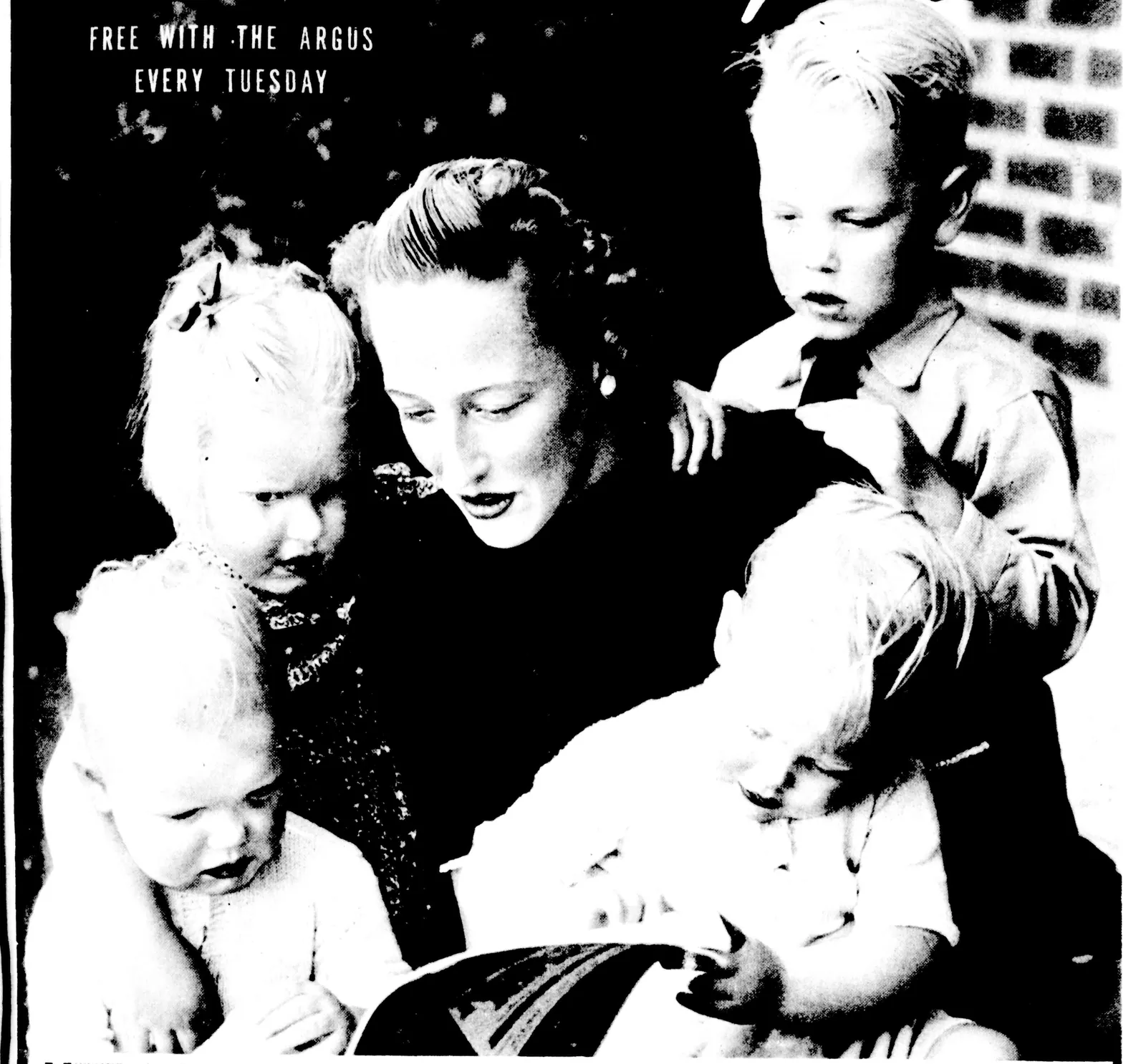
A newspaper photograph: a young woman with her hair swept up reads a book to four small fair-haired children crowded round her, two of them on her lap.
Reading to her four children on the front of The Argus’s Tuesday magazine, the week the book came out. The Argus, 16 March 1948, page 1, via Trove
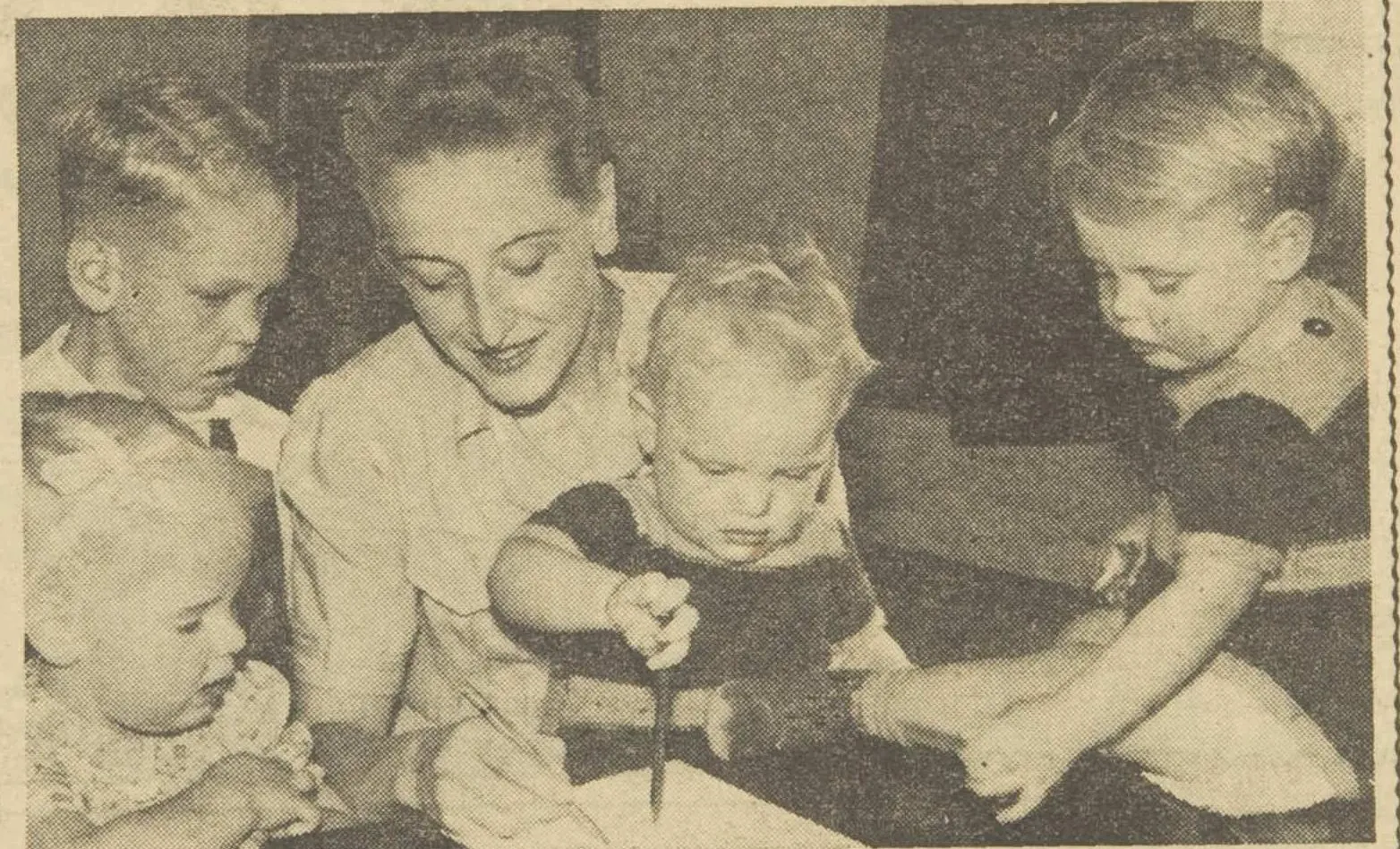
A newspaper photograph of a smiling woman at a table with four small children, one of them, a toddler, holding a pen to a sheet of paper.
“Write us a story, please”: Patrick, Rosemary, Anthony and Nicholas, April 1948. The Australian Women’s Weekly, 17 April 1948, page 20, via Trove
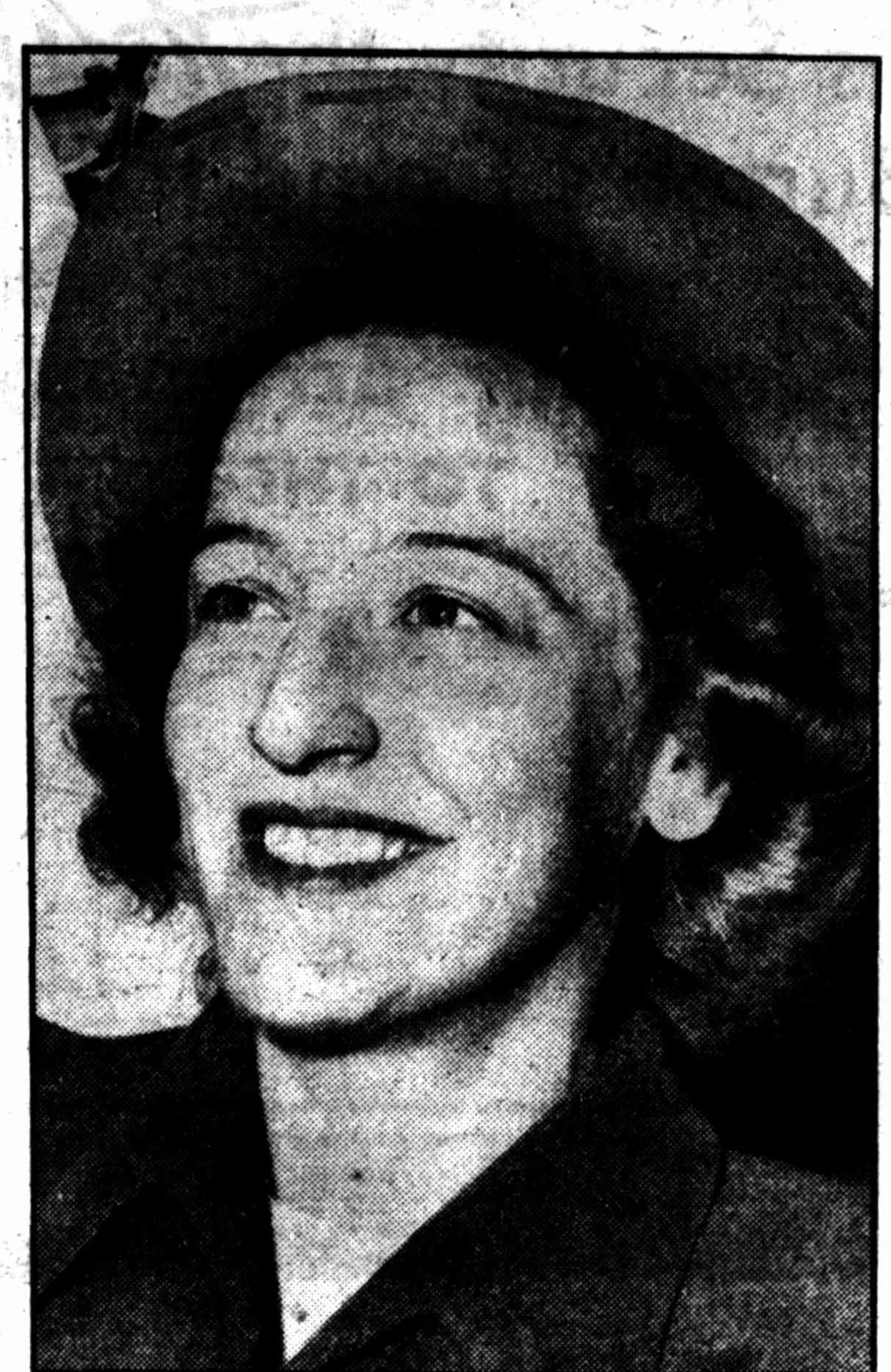
A newspaper portrait of a laughing woman in a dark felt hat.
In Sydney in May 1952, “in a smart grey flannel suit and battered red felt hat”, the month The Devil’s Caress came out. The Sun (Sydney), 25 May 1952, page 37, via Trove

The novels 1948–2015

Seven murders, and one lost

Six crime novels came out in her lifetime, and a seventh, turned down in the 1950s, was published in 2015. One more, The Law Courts Mystery, was turned down and is lost. Each is set in or near Melbourne, and each has a woman at its centre who works something out: first Maggie Byrnes, a telephonist, then Mother Paul, a nun.

Dark Passage, an imprint of Verse Chorus Press in Portland, Oregon, has brought all seven back into print since 2014, each with an introduction by Derham Groves, Lucy Sussex or Wendy Lewis.

“The first Australian crime writer to take seriously the idea that a woman can play a major role in detecting crime.”

Maggie Byrnes, No. 1 1948

Murder in the Telephone Exchange
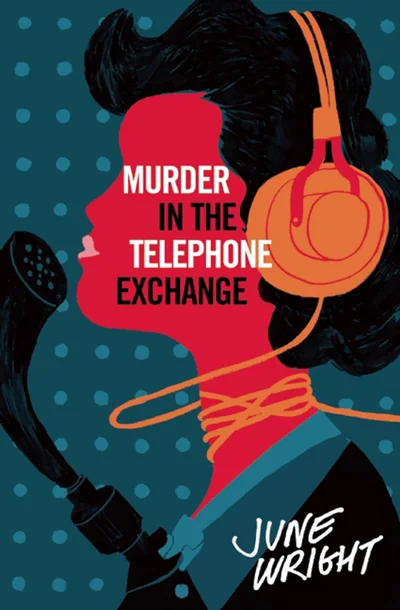
The Dark Passage cover of Murder in the Telephone Exchange.
First published
Hutchinson, London and Melbourne, March 1948; 351 pages, 10s. 6d.
Detective
Maggie Byrnes, a telephonist, who tells it; Detective-Sergeant John Matheson
Set in
The Central exchange, Lonsdale Street, in a February heatwave; a city boarding house; Albert Park
In print
Dark Passage, 2014, introduced by Derham Groves. ISBN 978‑1‑891241‑37‑6

Sarah Compton, a monitor nobody liked, is found at Central with her head bashed in with a buttinsky, the handset the staff listened in on lines with. Maggie Byrnes decides to find out who did it, and before she does, a junior girl is gassed. (Verse Chorus Press; The West Australian, 1 May 1948)

“Her knowledge of the technique of the Melbourne hello-girl is faultless.”

Melbourne, and her life, in it

Maggie Byrnes, No. 2 1949

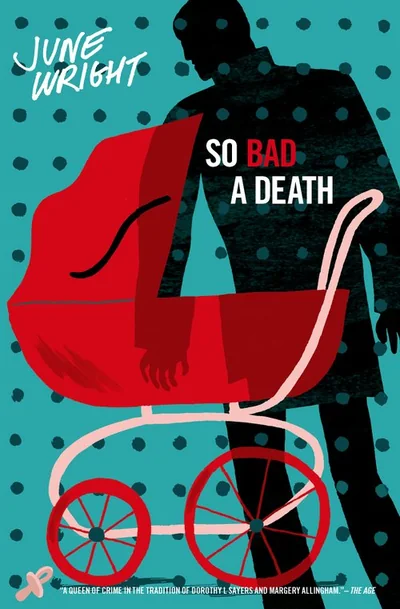
So Bad a Death

The Dark Passage cover of So Bad a Death.
First published
Hutchinson, London and Sydney, May 1949; 256 pages, 9s. 6d. A serial in Woman’s Day from March 1949, and read on ABC radio by Queenie Ashton from May 1950
Detective
Maggie, now married to Inspector John Matheson, with a son of two
Set in
“Middleburn”, a made-up outer suburb, and the Dower House she rents there
In print
Dark Passage, 2015, introduced by Lucy Sussex, with her 1996 interview of June Wright. ISBN 978‑1‑891241‑45‑1

James Holland runs his family and Middleburn with a ruthless hand, and is Maggie’s landlord. When he is shot dead his family is pleased, until Maggie comes to think that somebody also means to kill the baby who is his heir. (Hutchinson, 1949; Verse Chorus Press)

“Maggie is probably the most candid woman in contemporary crime records.”

Melbourne, and her life, in it

A stand-alone 1952

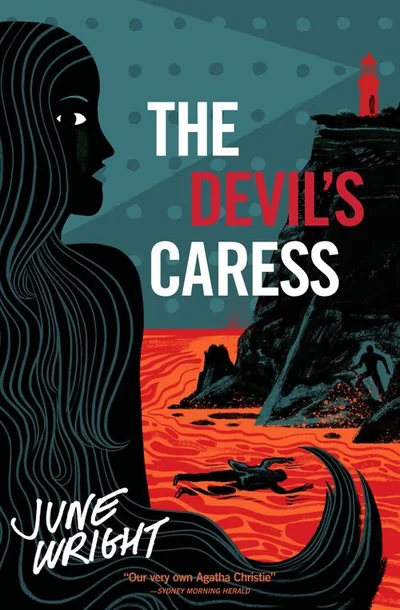
The Devil’s Caress

The Dark Passage cover of The Devil’s Caress.
First published
Hutchinson, London and Melbourne, May 1952; 232 pages, 13s. 3d. in Australia
Detective
Dr Marsh Mowbray, a young doctor
Set in
“Matthews”, a made-up resort on the Mornington Peninsula, and a house on the edge of a cliff
In print
Dark Passage, 2018, introduced by Wendy Lewis, whose stage version opened in Sydney that March. ISBN 978‑1‑891241‑43‑7

Marsh Mowbray spends a weekend at the cliff-top house of her chief, Dr Kate Waring. Kate’s husband, a surgeon, is found barely alive in a wind-break on the golf links, and his is not the only death. (Verse Chorus Press; J.J.Q., Sydney Morning Herald, 14 June 1952)

“It has a psychological twist — and a good one. It kept me guessing till 2 a.m.”

Melbourne, and her life, in it

Mother Paul, No. 1 1958

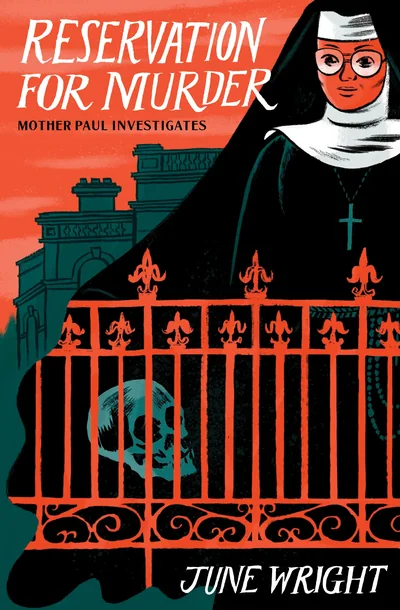
Reservation for Murder

The Dark Passage cover of Reservation for Murder.
First published
John Long, London and Melbourne, 1958; 223 pages
Detective
Mother Paul, a nun, and Mary Allen, who tells it
Set in
“Kilcomoden”, a made-up hostel for business girls, kept by nuns in an old mansion by the river, five miles from the city
In print
Dark Passage, 2020, introduced by Derham Groves. ISBN 978‑1‑891241‑40‑6

Many of the girls at Kilcomoden have had poison-pen letters. Then Mary Allen finds a stranger stabbed to death in the garden, and a few days later one of the residents is found drowned. (Verse Chorus Press)

“As fine a concatenation of cats as I have ever met.”

Melbourne, and her life, in it

A stand-alone, written in the 1950s 2015

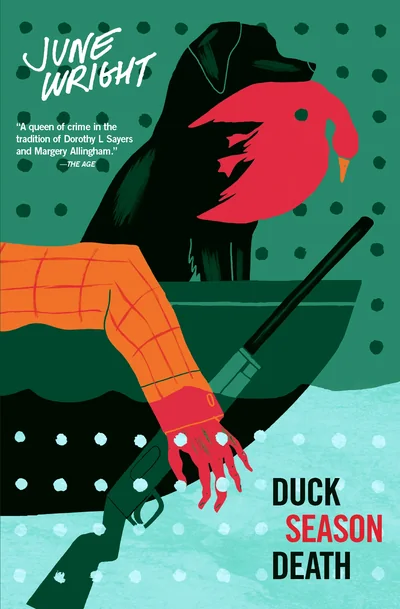
Duck Season Death

The Dark Passage cover of Duck Season Death.
First published
Turned down in the 1950s; first published by Dark Passage in 2015
Detective
Charles Carmichael, who reviews detective stories
Set in
The Duck and Dog Inn, a made-up shooting inn near the Murray in northern Victoria
In print
Dark Passage, 2015, introduced by Derham Groves. ISBN 978‑1‑891241‑35‑2

Somebody uses a duck shoot to kill the publisher Athol Sefton at a remote inn, and nearly everyone there had a reason. His nephew Charles sets out to solve it by the rules of the game he has learned reviewing detective stories. (Verse Chorus Press)

“A very sly and witty writer.”

Melbourne, and her life, in it

Mother Paul, No. 2 1961

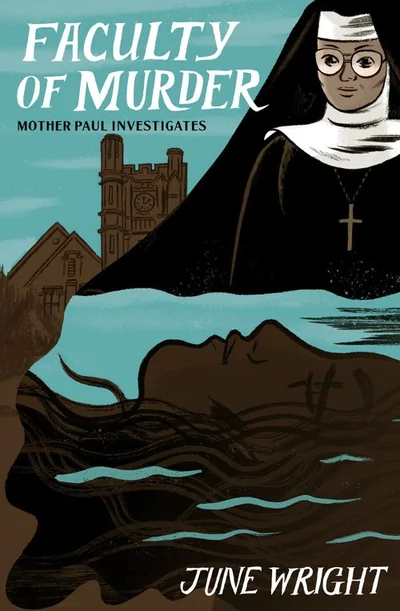
Faculty of Murder

The Dark Passage cover of Faculty of Murder.
First published
John Long, London, 1961; 191 pages, 15s. 6d. in Australia
Detective
Mother Paul, the new warden, and Elizabeth Drew, a tutor
Set in
“Brigid Moore Hall”, a made-up Catholic women’s college at the University of Melbourne
In print
Dark Passage, 2022, introduced by Lucy Sussex. ISBN 978‑1‑891241‑41‑3

Judith Mornane arrives at the hall and announces that she means to find out who murdered her sister, who vanished from it a year before, about the time a professor’s wife drowned in her bath. (Verse Chorus Press)

“The story moves fast and the characters are excellent. The only disappointment is the denouement which is really too silly for words!”

Melbourne, and her life, in it

Mother Paul, No. 3 1966

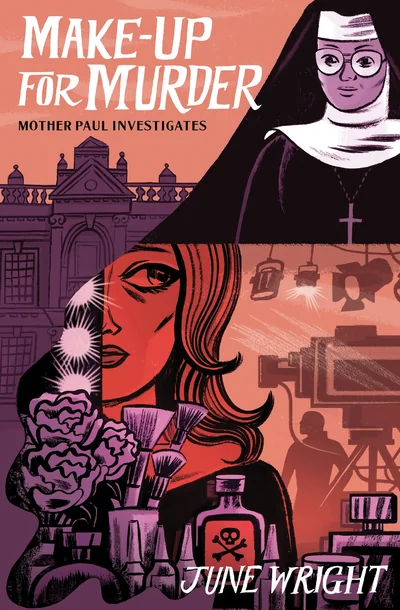
Make-Up for Murder

The Dark Passage cover of Make-Up for Murder.
First published
John Long, London, 1966
Detective
Mother Paul, now principal of the school, and Sue Berry, a secretary
Set in
“Maryhill College”, a made-up girls’ convent school in Melbourne, and a television studio
In print
Dark Passage, 2024, introduced by Derham Groves. ISBN 978‑1‑891241‑42‑0

Maisie Ryan was bullied at Maryhill; ten years on she is Rianne May, a television star, and the guest of honour at the old girls’ reunion, where one of the women at her table drops dead, poisoned. (Verse Chorus Press)

Melbourne, and her life, in it

Unpublished, and lost

The Law Courts Mystery

Written by 1952 and set in the Melbourne law courts, where she spent many hours gathering detail. It was with Hutchinson in London in May 1952; they turned it down, and the manuscript is lost.

Sources The Age, 14 May 1952, p. 5; Derham Groves, 2012.

Afterwards 1966–2012

Back on the telephones

She stopped writing crime when Stewart became unable to work. She went back to the telephones, this time at the TAB, for six years; when he started a cleaning business she trained in business to help him run it, until he died in 1989. She wrote for Catholic journals, the Majellan among them.

In the 1990s, from Glen Waverley, she published a history of her mother’s family, The Eagle and the Stag, and a memoir, Remembering Melbourne: circa 1950. Lucy Sussex, interviewing her for Stephen Knight’s history of Australian crime fiction, found her “as sharp as tacks”.

June Wright died on 4 February 2012 in an aged-care home at Clayton, aged 92. She left six children, 17 grandchildren and 10 great-grandchildren.

“Maybe I’ll never write a classic. Maybe that isn’t my role in life. But vegetable I’ll never be.”

Derham Groves 2007–2024

Found again

Derham Groves, of the University of Melbourne, began reading June Wright in 2007, alongside S. H. Courtier, and called Mother Paul “Australia’s ‘Father Brown’”. In 2008 he curated Murderous Melbourne at the Baillieu Library, an exhibition of the city’s crime fiction with the jacket of Faculty of Murder on its poster. His architecture students designed new jackets for that book, and a Centre for Australian Crime Fiction with a gallery named after her. Writing it up in the La Trobe Journal in 2009, he could say that she was living in Glen Waverley with her son Anthony.

When she died in February 2012 he posted the foreword he had written for Duck Season Death, then unpublished, and wrote her obituary with her eldest son, Patrick, for the Sydney Morning Herald and The Age. An obituary reached Steve Connell of Verse Chorus Press in Portland, Oregon, saying the family wanted her books back in print, and he wrote to Patrick; Lucy Sussex says it was the one on Groves’s website.

Murder in the Telephone Exchange was launched again at the Sun Theatre in Yarraville on 27 April 2014, with Groves, Lucy Sussex, Stephen Knight and Patrick Wright speaking. Groves has introduced four of the seven Dark Passage editions, among them the first publication of Duck Season Death.

“Interesting local settings, feisty female protagonists, and credible social situations characterize Wright’s six crime novels.”

  • The Dark Passage cover of Murder in the Telephone Exchange.

    Murder in the Telephone Exchange

    Introduced by Derham Groves. Dark Passage, 2014. Paperback, 330 pages. ISBN 978-1-891241-37-6.

    BooktopiaReadingsAmazon

  • The Dark Passage cover of Duck Season Death.

    Duck Season Death

    Introduced by Derham Groves. Dark Passage, 2015. Paperback, 192 pages. ISBN 978-1-891241-35-2. Its first publication.

    BooktopiaAmazon

  • The Dark Passage cover of Reservation for Murder.

    Reservation for Murder

    Mother Paul Investigates

    Introduced by Derham Groves. Dark Passage, 2020. Paperback, 248 pages. ISBN 978-1-891241-40-6.

    BooktopiaReadingsAmazon

  • The Dark Passage cover of Make-Up for Murder.

    Make-Up for Murder

    Mother Paul Investigates

    Introduced by Derham Groves. Dark Passage, 2024. Paperback, 168 pages. ISBN 978-1-891241-42-0.

    BooktopiaReadingsAmazon

Sources Read 10 October 2026

Where this comes from

Her life is from the newspapers of her time, read on the National Library’s Trove, from the obituary Derham Groves wrote with her son Patrick, and from Groves’s foreword of 2012; the novels are from the reviews of the day and of the reissues, and from the publisher. Each part names its sources under it. Her own words are quoted short: she died in 2012, so they are hers until 2082. Where the sources disagree, the page goes with the record made nearest the event, and the disagreement is here:

  • How long she was at Central: three years, she told The Argus in 1948; four, said The Australian Women’s Weekly the same year; 1939 to 1941, say her obituary and the 2014 relaunch.
  • When she married: 1941, says her obituary, written with her son; 1942, says one later account. In 1953 The Argus said she married at 22, which allows either. No notice of the wedding has been found.
  • The competition’s prize: £1000 in the Advocate in 1946, £10,000 in 1948. The announcements of 1943 put £10,000 across nine sections, so £10,000 was the whole contest. Whether her book won anything is not clear: no detective prize was awarded, says the Advocate.
  • Who typed the manuscript: she hired a typewriter and typed it herself, said the Advocate; her sister typed it, said the ABC Weekly. Both 1948.
  • “Outsold even Agatha Christie”: Woman’s Day’s advertising for its serial, March 1949. The Herald printed the same copy as “outsold all imported thrillers”. No sales figure has been found.
  • Where So Bad a Death was serialised: Woman’s Day, from 28 March 1949, by the advertisements of the day; the Australian Women’s Weekly, says Derham Groves in 2012.
  • Middleburn: Berwick, thinks Groves; Ashburton, where she was living, says a Sisters in Crime review.
  • When Duck Season Death was written: the sources range from the mid-1950s to about 1959.
  • The old Central exchange: built in 1908–09 and in use by 1910 or 1911, by the papers of the day; demolished for the 1969 Lonsdale Exchange, by former PMG men commenting on Marcus Wong’s blog and by Rohan Storey. Wikipedia’s short article does not say it was pulled down.
  • Why she stopped writing: her husband became unable to work, says her obituary, written with her son; he suddenly fell ill, says Groves; he lost his job, says another account.
  • The reissues’ years: Make-Up for Murder came out in the United States in September 2024 and in Australian shops on 1 February 2025; Reservation for Murder in November 2020 and in Australia in April 2021. The page gives the first.